Is Your Solar Installer Licensed? Look Up Your State and NABCEP
Pull up the license rule and the official lookup for 12 states, learn what NABCEP certification does and does not prove, and get the five answers to ask for in writing before you sign. Read from state sources on November 13, 2026.
Updated
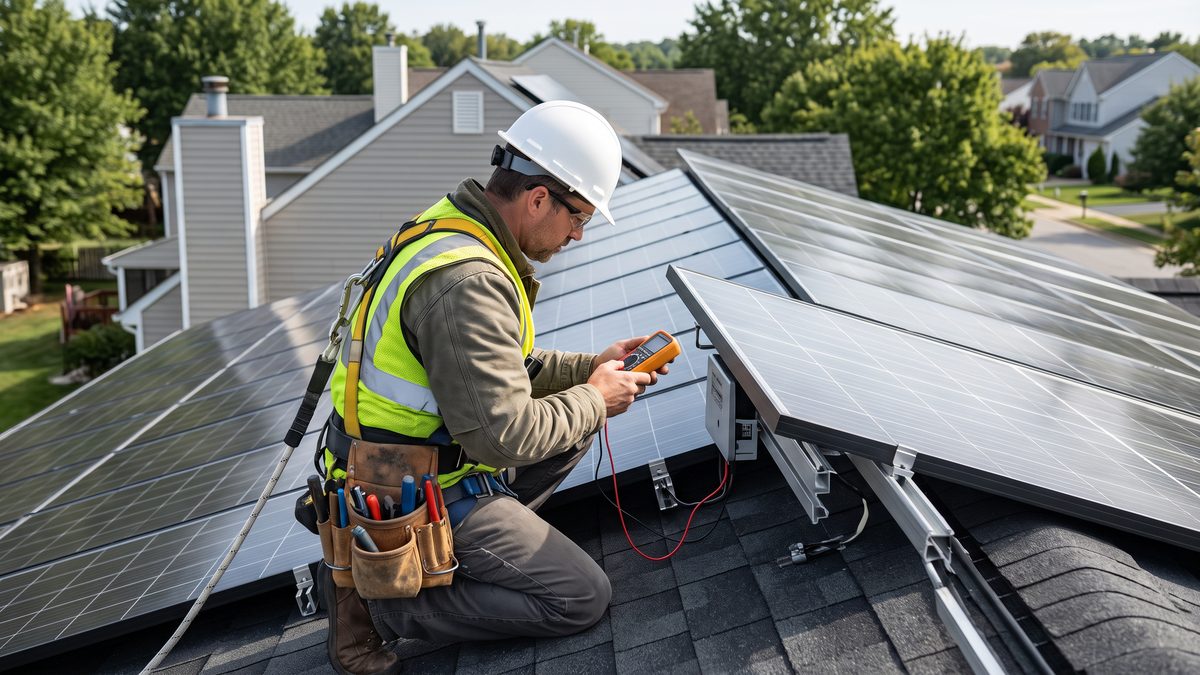
A license number takes two minutes to check on a government site, costs nothing, and tells you more than any review.
Do it before the deposit, not after the panels are on the roof. The table covers the 12 states where our lists have cities. Everything in it comes from the state's own pages, opened on November 13, 2026.
Pull up your state's rule
Pick a state to get its card, or type a word to filter the table (a state, a classification, "electrical").
Choose a state above and its rule, its regulator and a link to the official lookup show up here.
| State | Who licenses or registers | What the official text says | Look it up |
|---|---|---|---|
| California | Contractors State License Board (CSLB) | Solar work needs a contractor license in one of these classes: A, B, C-10 (electrical) or C-46 (solar). A C-46 contractor installs, modifies, maintains and repairs thermal and photovoltaic systems. Salespeople generally have to be registered with the board as Home Improvement Salespersons. | Check a license |
| Texas | Texas Department of Licensing and Regulation (TDLR) | A residential solar contract has to say that a licensed electrical contractor will do the installation, and has to name that contractor and its license number. Since September 1, 2026, residential solar retailers and their salespeople also have to be registered with TDLR (electrical contractors that sell solar are exempt from that registration). | TDLR license search |
| Florida | Department of Business and Professional Regulation (DBPR) | State law defines a solar contractor as one who installs, alters, repairs and maintains solar panels for water heating, pool heating and photovoltaic systems. A contractor certified or registered under the same chapter does not need a separate solar license for services inside the scope of its own license. | DBPR license search |
| Arizona | Registrar of Contractors (ROC) | Contractors are licensed by classification. The Registrar's classification pages would not open for our checking tool, so we do not say which classification covers solar electric work. Open the search, read the classification on the company's license and ask which one covers your job. | Contractor search |
| Nevada | State Contractors Board | State law (NRS 624.860) says nobody may do or offer any work on a residential photovoltaic system that produces electricity without a contractor license that covers it, or another state license, certificate, registration or permit that authorizes the work. | Contractors Board site |
| Colorado | State Electrical Board (Division of Professions and Occupations) | A 2025 law (SB 25-165) brings photovoltaic installers under the Electrical Board. A contractor already working as a photovoltaic installer on September 1, 2025 with at least one NABCEP-certified employee has to register with the board by December 31, 2026. | Search the state site for the Electrical Board |
| New Mexico | Construction Industries Division (CID) | Anyone bidding on or contracting for a solar PV electric system must hold a CID license in the EE-98, EL-1 or ER-1 classification, as applicable. A GB-98 general license is allowed where the rule says so, and a GB-02 for structural work on residential construction. | CID licensing page |
| Washington | Department of Labor and Industries (L&I) | Installing electrical wiring or equipment as a business takes an electrical contractor license from L&I. The state's solar rule says the structural support for a PV system may be done by the owner, a registered general contractor or a licensed electrical contractor. | L&I license verification |
| Oregon | Building Codes Division and Construction Contractors Board | Oregon has a Limited Renewable Energy Contractor license (CLR) for renewable installations up to 25 kVA and 600 volts. The company must employ at least one full-time renewable energy technician. Ask which license the company holds and look up its contractor registration too. | Contractors Board search |
| Illinois | Illinois Commerce Commission (for the state incentive program) | The pages we read describe the incentive program, not a statewide license. Illinois Shines accepts systems installed by a "Qualified Person" under the Public Utilities Act, and its installers are certified by the Commission as Distributed Generation Installers. Ask your city or county what it requires for the work and the permit. | Illinois Shines vendor list |
| Pennsylvania | Office of Attorney General, Bureau of Consumer Protection | The state keeps no list of qualified solar installers. Installers count as home improvement contractors and must hold a certificate of registration from the Bureau of Consumer Protection. | Home improvement registration search |
| Maryland | Maryland Home Improvement Commission (MHIC) | Solar panel systems have to be mounted by a licensed home improvement contractor. Whoever connects the panels to the electric box or the grid must hold an electrician's license issued by the local jurisdiction. | MHIC license search |
What NABCEP certifies, and what it does not
NABCEP is a private certifying body for solar and storage workers. It certifies people, and it accredits companies. It does not license anyone: its own terms say certification is not a professional license issued by a government agency and does not authorize anyone to practice.
- PV Installation Professional (PVIP)
- The board certification that covers PV design, installation, operations, commissioning and maintenance.
- Specialist certifications
- PV Design Specialist (PVDS), PV Installer Specialist (PVIS) and PV Commissioning and Maintenance Specialist (PVCMS), each for one part of the job.
- PV Associate (PVA)
- The associate-level credential. Useful for a crew member, weaker evidence for the person running your job.
- Energy Storage Installation Professional (ESIP)
- For batteries. It asks for OSHA 30 training, 58 hours of advanced storage training and recent storage projects.
- Accredited Company
- A company that meets NABCEP's staffing and policy requirements and passes at least three randomly selected inspections of finished installations.
Check one in a minute
Ask for the person's name and certificate number, then search the NABCEP directories. Each entry shows the credential, the certificate number and an expiry date.
A certified person on the payroll is not the same as a certified person on your roof. Ask who that is, and whether they design the system or supervise the crew.
Open the NABCEP directoriesPut these five answers in writing
- The license number and the office that issued it.Look it up yourself. The name has to match your contract, the status has to be active, and the classification has to cover the work.
- Who does the electrical work.If the company selling the system is not the company doing the wiring, you need both names and both numbers. Texas makes the contract say it, and it is a sound rule anywhere.
- The NABCEP certificate number of the person responsible.Then look it up and read the expiry date.
- Who pulls the permit and who asks the utility to approve the connection.Texas contracts have to say so. If yours does not, ask for a line that does.
- The last day you can cancel.Texas contracts must give a five business day window and state the final date. Other states differ, so ask for the date before you sign.
When you are ready to ask for estimates, pick your city on the solar companies list, or the electricians list if the job is a new panel or charger.
Whoever sells it may need a separate registration
California
Solar sales representatives generally have to be registered with the contractors board as Home Improvement Salespersons. The board's solar page links the check.
Texas
From September 1, 2026, residential solar retailers and the salespeople who work for them must be registered with TDLR. A company licensed as an electrical contractor that also sells solar is exempt from that registration but still has to follow the rest of the law.
Where this table comes from
Each row was read from the regulator's own page, rule or statute on November 13, 2026, and rewritten in plain words. We did not copy license numbers or company names, and we do not claim that any business here holds a license: the lookup is your step.
Some sites would not open for our checking tool, and we say so in the table: Arizona's classification pages, the Pennsylvania lookup (its link comes from the state's own page) and the Colorado board's pages, for which we show no link. If a link fails for you, search the board's name.
Rules change. The date at the top of the page tells you when we last read them. Spot a row that no longer matches the state's page? Tell us on the Contact page and we will return to the source and fix the row.