What Your Utility Pays for the Solar Power You Send Back
How utilities credit exported solar power, what the official texts say in California, Nevada, Washington, Oregon, Maryland and New Mexico, a calculator for your own numbers, and the questions to put to an installer. Read on November 13, 2026.
Updated
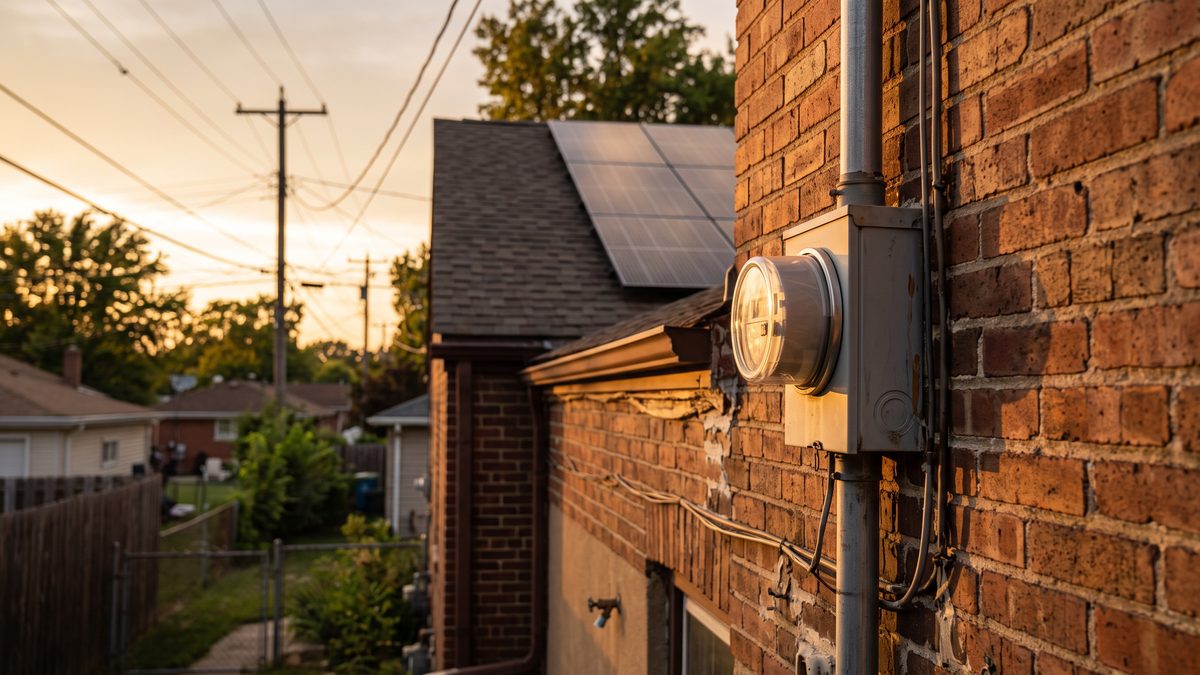
A kilowatt-hour you send back is worth whatever your utility's tariff says, and that can be anything from the full retail price to a few cents. Some utilities credit each exported kWh against your bill one for one, some credit a share of the retail price, and some pay a lower wholesale-style price. The only way to know is to ask for the tariff in writing before you sign.
Run your own numbers
The starting values are an example. Replace them with the production estimate from your quote and the rate from your utility bill.
What six states' official texts say
Each row restates the regulator's or the legislature's own text as we read it on November 13, 2026. Your utility's filed tariff is what applies to you, so use this to know what to ask for.
| State | What the text says | Where to read it |
|---|---|---|
| California | Since April 2023, new rooftop customers are paid under the Net Billing Tariff, which the Public Utilities Commission says better matches the value the system gives the grid and rewards a battery. Customers already on the older NEM 1.0 and NEM 2.0 tariffs stay on them for now. | CPUC, 2025 Senate Bill 695 report |
| Nevada | New customers are on Tier 4 of the 2017 law (AB 405): exported energy is credited at 75% of the retail rate, kept for 20 years at that address, with no capacity limit on the tier, unless the legislature changes it. It applies to systems of 25 kW or less. | Nevada Public Utilities Commission, Net Metering page |
| Washington | Excess energy in a billing period is credited as kilowatt-hours on the next bill. Utilities must offer net metering first come, first served until June 30, 2029 or until net metering reaches 4% of the utility's 1996 peak demand, whichever is earlier, and consumer-owned utilities may set a different tariff from then. | RCW 80.60.020 and 80.60.030 |
| Oregon | Excess kilowatt-hours in a billing period are credited, but a utility may value them at its avoided cost as set by the commission. The rule covers systems of 25 kW or less unless the commission sets a higher limit. Credit still unused at the March billing cycle each year goes to low-income programs, back to you or to another use the commission decides. | ORS 757.300 |
| Maryland | Utilities must offer net energy metering first come, first served until statewide capacity reaches 3,000 MW or July 1, 2027, with exceptions the statute lists. Net excess generation can be carried forward, and the statute says how its dollar value is worked out from the generation part of the rate. | Public Utilities Article, section 7-306 |
| New Mexico | The Commission's rule gives small producers a net metering option. The utility meters the net flow, net energy sent to the utility is bought at its energy rate, and a net amount owed to you under $50 may roll to the next period. Utilities file tariffs for systems up to 10 kW. | 17.9.570 NMAC |
Texas, Arizona, Florida, Colorado, Illinois and Pennsylvania are not in the table because we did not read their rules in full today, and we would rather leave a state out than guess. Co-operatives and city utilities often follow their own tariffs even inside these states.
Why batteries come up in every quote
They are becoming the default
Berkeley Lab found that 37% of home solar installs in 2025 were paired with storage, up from 25% in 2024. The median battery was 13.5 kWh.
Tariffs can pay for timing
California's net billing tariff prices what you send back by the time of day and, the CPUC says, gives better price signals to systems with a battery. Where a utility pays little for exports, using your own power in the evening is what a battery sells.
A battery adds about $2.1 per watt of solar for cash purchases at the median, so it only makes sense if it earns that back. Run the calculator above with your own credit rule before you accept it.
What to ask the installer
- Which tariff will I be on, and can you show me the utility's document with its name and number?
- Does the credit I earn in summer roll over to winter, and when does leftover credit expire or get paid out?
- Is the export rate fixed for a number of years, or can the utility change it?
- How much of the production in your estimate do you assume I use directly in the home?
- Which monthly fees apply to a customer with solar that do not apply to a neighbor without it?
Ask these of every installer on your short list, which you can build from the solar companies in your city. Adding a battery or an EV charger also means an electrician who can size the main panel.
Where these rules were read
Every row in the state table was read from the regulator's page or the statute on November 13, 2026. For Maryland we point to the statute's exceptions and do not describe them.
A row that has changed since? Use the Contact page and we will read the source again.